
The AI Tool Graveyard: Why 40% of AI Startups Die in Year One
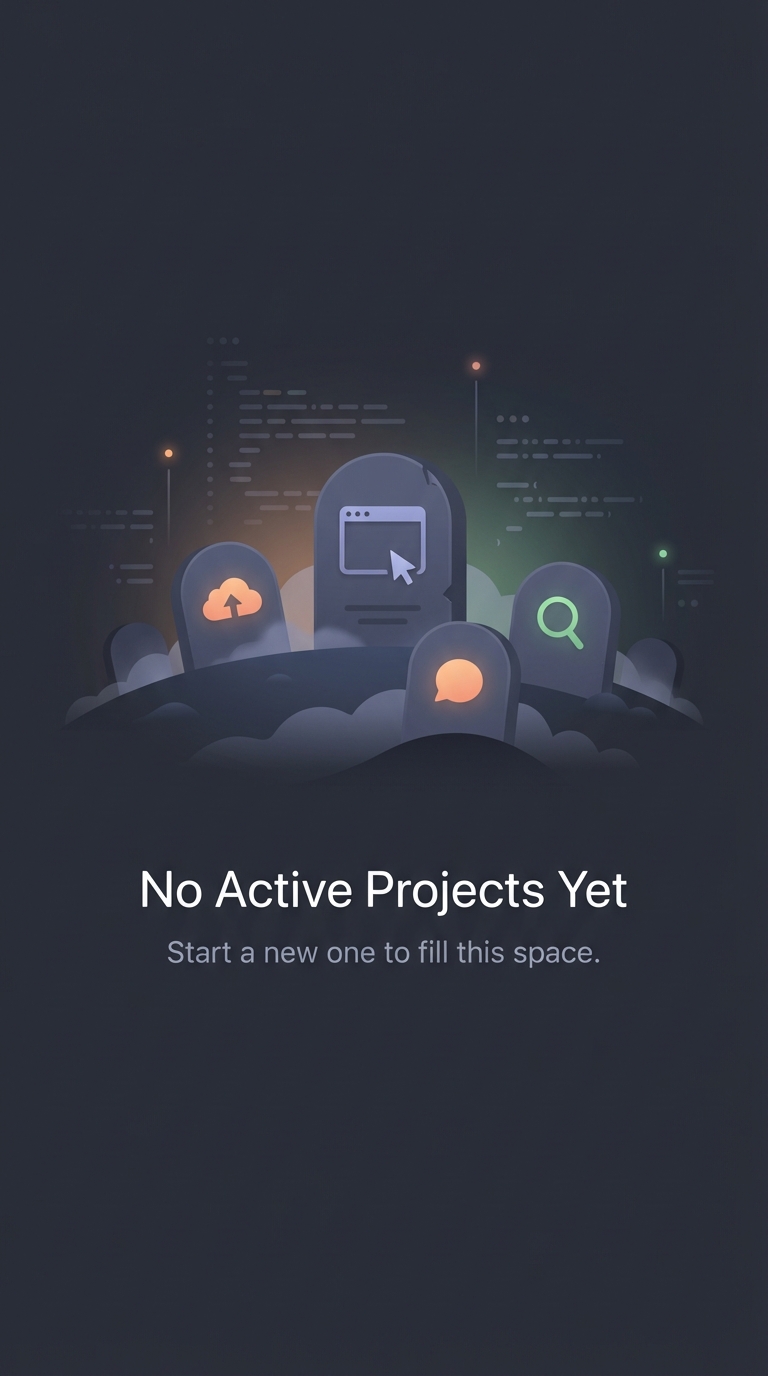
There's a graveyard growing quietly underneath the AI hype cycle, and it's bigger than anyone's talking about.
Every week, a handful of AI startups quietly shut down their free tiers, stop responding to support emails, or post a "we're sunsetting" notice that gets 12 likes. Most never make the news. They just disappear. And based on the data we've been tracking across 6,000+ AI tools on TryAnAI, the failure rate in year one is somewhere around 40%.
That's not a bug. It's a structural feature of how this market works.
The Build-First Trap
The single biggest killer isn't competition. It's timing. Founders see a capability gap — GPT-4 can do X, but nobody's wrapped it into a proper product yet — and sprint to market. The window feels narrow. Ship now, figure out the business later.
The problem: users come for the novelty, not the value. When a tool goes from "free preview" to "$15/month," the question stops being "can I use this?" and becomes "do I *need* this?"
Most tools can't answer that second question. They're solutions to problems that weren't painful enough.
The tools that survive year one have one thing in common: they replace an actual workflow, not just assist with a task. Cursor didn't replace Google searches about coding — it replaced how you write code. That's a different magnitude of value.
The Free Tier Death Spiral
Here's a pattern I've seen kill dozens of AI tools:
- Launch with generous free tier to build user base
- Burn through compute credits subsidizing non-paying users
- Raise prices or cut limits to survive
- Users leave for the next free tool
- Repeat until runway runs out
Playground tools — the ones where you type a prompt and see what happens — are especially vulnerable. They attract curious users, not committed ones. Curious users don't pay.
The tools that escape this spiral usually do it by building switching costs before they raise prices. Once Perplexity became your research habit, the $20/month for Pro felt obvious. Once your whole team's knowledge base lives in Notion AI, you're not switching because pricing shifted.
The Wrapper Problem Is Real, But Overstated
Everyone loves to dunk on "ChatGPT wrappers" — apps that are essentially a UI on top of an API with minimal differentiation. And they're not wrong that it's a weak foundation. OpenAI can (and has) built competing features directly into ChatGPT, instantly obsoleting a category of startups.
But the wrapper criticism misses something: the UI and workflow *is* the product for most users. The reason Jasper survived despite being, at its core, a GPT wrapper, is that it built templates, team workflows, and brand voice features that made switching genuinely painful for marketing teams.
The wrappers that die are the ones that add convenience without adding lock-in. The ones that survive add enough workflow glue that the underlying model becomes an implementation detail.
What the Survivors Did Right
Looking across the tools in our directory that are still standing after 12-18 months, some patterns emerge:
Narrow target, deep value. Otter.ai didn't try to be an AI assistant — it tried to be the best meeting transcription tool. That specificity let it build features that generalists couldn't. The broader your scope at launch, the shallower your value in any one area.
Priced for the buyer, not the user. Tools that sell to businesses — where the person paying isn't the person using the product — have survived at much higher rates. Enterprise buyers care about ROI, not monthly cost. The math is different.
Built a moat before the big players noticed. The graveyard is full of tools that were in categories that OpenAI, Google, or Anthropic eventually decided to address natively. Timing matters enormously. Code explanation tools mostly died when Copilot got smarter. Basic AI writing tools took hits when ChatGPT improved. The surviving tools either got into defensible niches first or built enough of a brand moat to outlast the commoditization wave.
The Category That's Most At Risk Right Now
If I had to pick the category most likely to fill the graveyard in 2026, it's AI productivity assistants — the catch-all "do anything" agents that promise to replace your entire workflow.
They're solving a problem that's mostly real, but in a way that's maximally difficult to monetize. The value is diffuse. The comparison set is enormous. And they're competing directly against what foundation model companies are building into their flagship products.
AI writing tools had a similar problem two years ago, and you can see how that played out — the generic ones largely got commoditized, and the survivors are the ones that went deep on specific formats (long-form journalism, legal contracts, ad copy) rather than trying to write everything.
The Honest Takeaway
None of this means you shouldn't use AI tools that are early or small. Many of the best tools in any category are still figuring out their business model. Use them while they're free, export your data, and don't build critical workflows on a single tool without a backup plan.
But the failure rate is a useful signal: most AI tools aren't dying because AI doesn't work. They're dying because being technically impressive and being genuinely needed are different things. The tools that close the gap between those two survive. The ones that don't, become tombstones.
Explore What's Still Standing
If you want to find tools with track records and real user bases, the TryAnAI directory shows pricing history, update frequency, and alternatives for every tool: