
We Analyzed 6,000 AI Tools — Here Are the Pricing Trends
We track 6,199 AI tools on TryAnAI. That's a lot of pricing pages, a lot of "contact us for enterprise," and a lot of $19.99/month plans that quietly become $24.99 after the launch promo expires.
So we did something useful with the data: we looked at it.
Here's what the pricing landscape for AI tools actually looks like in 2026 — broken down by category, tier, and some patterns that surprised us.
Most AI Tools Are Still Free (To Start)
Roughly 68% of tools in our directory offer some form of free access — either a free tier, a free trial, or a freemium model. That's higher than most software categories. SaaS tools for accounting or HR? Free tier is rare. AI tools? Everybody has one.
The reason isn't generosity. It's acquisition. The marginal cost of compute has dropped enough that a generous free tier is now a customer acquisition cost, not a charity. If you can hook someone on your voice clone tool, you can convert them to a $22/month plan later.
What "free" actually means varies wildly though:
- Hard limits: 50 generations/day, 10,000 characters/month, 3 projects
- Watermarked output: Free video, but with a logo burned in
- Feature gates: Free tier has the features nobody wants
- Trial windows: 14 days and then they want a card
The most honest free tiers are from tools that are genuinely trying to build a habit, not just collect email addresses. ElevenLabs, Perplexity, and Notion AI all have free tiers you can actually use productively.
The $20/Month Gravity Well
If you look at paid plan pricing across our directory, there's a massive cluster around $15–$25/month for the entry paid tier. This isn't a coincidence — it's a deliberate pricing signal.
The pattern: charge less than a Netflix subscription so the decision feels trivial, but more than free so usage feels intentional. The $20 price point has become the consumer AI tool equivalent of the $9.99 SaaS standard from ten years ago.
Where it breaks down: tools that charge $49–$79/month for individual plans without enterprise features. That's the zone where you lose people. Above $30, buyers want a business case. Below $15, you're fighting to be taken seriously. The $49 tier is no man's land — too expensive for casual use, not enough for teams.
AI Image and Video Tools Cost the Most
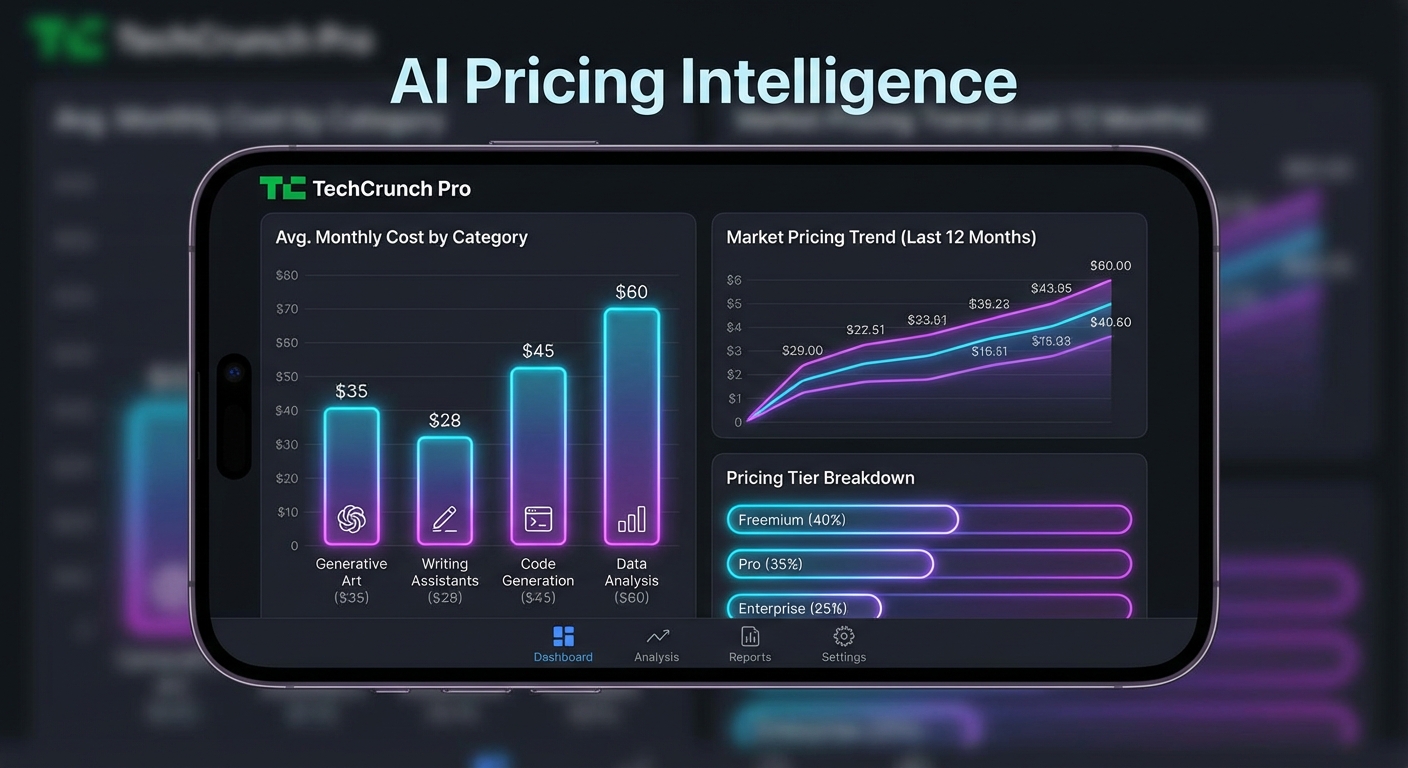
By category, video generation is the most expensive category in our data. The median paid tier for AI video generators sits around $36/month — more than twice the median for AI writing tools ($16/month).
This tracks. Video generation is compute-intensive in a way that text isn't. Generating a 30-second clip requires substantially more infrastructure than generating a paragraph. The costs are real, and providers are passing them on.
Image generation is cheaper than video but more expensive than text — median around $22/month. What's interesting is how quickly the high-end tiers escalate. Midjourney's top tier ($120/month) and Adobe Firefly's enterprise pricing both reflect that serious creative workflows have serious compute requirements.
AI coding tools are surprisingly affordable given their value. Cursor's cheapest paid plan, GitHub Copilot's base tier, and most code assistant tools land in the $10–$20/month range — cheaper than productivity tools or writing assistants, even though the underlying models are the same.
"Contact Us" Is Not a Price
About 23% of enterprise-tier tools in our directory have no public pricing. Some categories are worse: AI infrastructure tools, B2B workflow automation, and anything targeting Fortune 500 companies skew heavily toward "contact sales."
This creates a two-tier market. For indie users and small teams, pricing is visible and competitive. For enterprise buyers, it's a negotiation — and the starting point is often 10x what a reasonable person would guess.
The tools with the best enterprise transparency are, ironically, the ones that don't need enterprise buyers to survive. Anthropic's Claude API pricing is public and granular. OpenAI's GPT-4o pricing is table-shaped and understandable. Tools that are genuinely confident in their value tend to show it.
The Biggest Pricing Trend: Per-Seat Is Dying
The most notable shift we've seen in the last 12 months: per-seat pricing is losing ground to usage-based models.
A year ago, most AI tools were $X/user/month. Now more tools are moving toward credit systems, generation limits, or pure consumption pricing. The economics work better for providers when heavy users pay more — and it's actually more fair for light users.
The problem: usage-based pricing is anxiety-inducing. Nobody wants to hit a limit mid-project. Tools that are executing this transition well (Suno, ElevenLabs, many image generators) are clear about what a "credit" costs in real-world output. Tools that are doing it poorly give you credits with no obvious translation to actual usage.
What This Means If You're Buying AI Tools
Budget $40–$60/month if you're serious. That's enough to cover one solid AI writing tool, one image or audio tool, and one productivity tool at entry paid tiers. Trying to do everything for free means dealing with frustrating limits on every front.
Yearly billing saves 20–30% almost universally. If you've been using a tool for 3+ months, switch to annual. The savings are real and the cash flow hit is minimal.
Free tiers for evaluation, paid for production. The free tiers are good enough to decide if a tool fits your workflow. They're not good enough to actually rely on if your work depends on it.
Watch for price increases. Several major tools raised prices in Q4 2025 — often for existing users with 30 days notice. Lock in pricing where you can, and don't be surprised when it changes.
Explore More
- Browse all AI tools by pricing tier — filter by free, freemium, and paid
- AI writing tools — see full pricing breakdowns for 200+ options
- AI image generators — compare Midjourney, DALL-E, Ideogram side-by-side
- AI video generators — pricing comparison for Runway, Kling, Sora, and more
- Compare tools head-to-head — stack any two tools against each other on specs and price