
The AI Tools Accountants Actually Use in 2026 (From Receipts to Close)
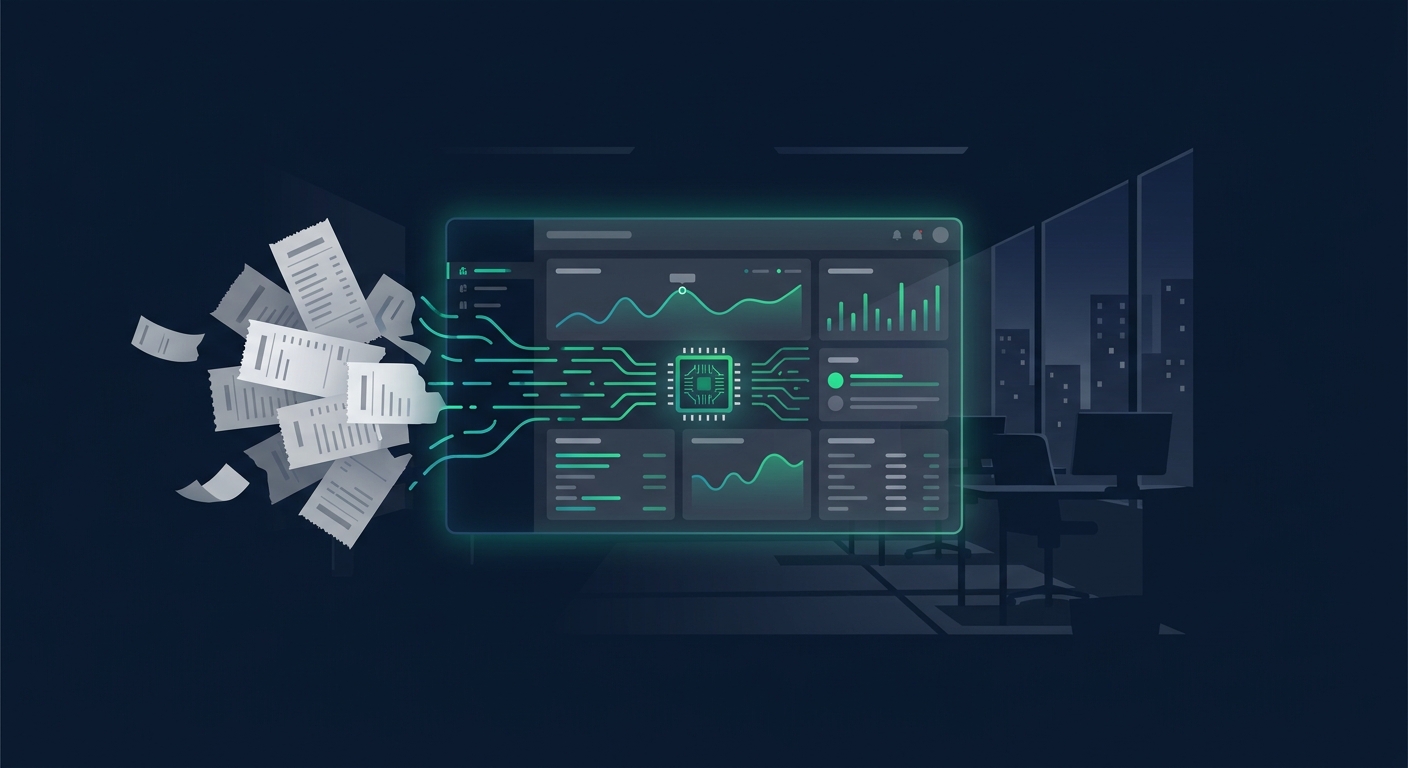
Spend a week inside a mid-market accounting firm in 2026 and the split is brutal. One desk has a controller closing books in five business days with two staff. The desk across the hall is still chasing receipts on day twelve. Same training, same software stack on paper, same client list. Different operating posture.
The gap isn't AI in the abstract — every firm has "adopted AI." The gap is *which* tools, *where in the workflow*, and whether the human still owns the judgment call at the end.
This is the stack I see actually deployed in the firms quietly winning the talent war — not in the keynote slides, but on the second monitors of senior accountants who haven't worked a Saturday since Q1.
The five jobs of an accountant (and where AI earned a seat)
The job is capture, classify, reconcile, close, advise. AI ate the time cost of the first three. The last two — *close* and *advise* — got *more* valuable, not less. The CPA who sits with the founder and explains why margins are slipping is still the irreplaceable seat. The AI just makes sure that conversation is the thing you have time for that week.
1. Capture — the death of the receipt envelope
This is where AI hit first and the gains are now table-stakes.
- Ramp — corporate cards plus AP automation plus an LLM that codes transactions to GL accounts at 90%+ accuracy after a month of training on the client's history. Firms running clients on Ramp are billing for advisory hours instead of categorization grunt work.
- Brex — same category, slightly different fit. The teams that picked Brex did so for the multi-entity expense logic and the spend-policy guardrails. Either choice is fine; both eat 6–8 hours a week per client.
- Vic.ai — pure-play invoice automation for clients still on QBO or NetSuite. Coding accuracy in the high 90s on stabilized vendor sets. The argument against it used to be price; the argument for it now is the controller's evenings.
- Digits — the dashboards clients actually open. The bookkeeping side is fine; the win is the founder finally engaging with their P&L because it doesn't look like an Excel artifact from 1998.
The firms still re-keying credit-card statements aren't behind on tech. They're behind on revenue per partner, and the cause is upstream.
2. Classify — and the new role of the bookkeeper
The scary headline of 2024 — "AI will replace bookkeepers" — turned out backwards. The bookkeepers who adopted these tools doubled their client load. The ones who didn't are the ones who left the profession.
- Botkeeper — categorization-as-a-service for firms that want the labor leverage without rebuilding their own ops. Loved by sub-50-staff firms.
- Pilot — for clients who want the bookkeeping done *for* them, not by their firm. Useful as a referral, not a competitor — firms partnering with Pilot focus on tax and CFO work and outsource the ledger entirely.
- QuickBooks with Intuit's AI Assist — the floor has risen. The default GL now does categorization that used to require a junior staff member. Train it once on the client's chart of accounts and it stops asking dumb questions.
- Xero — same story, slightly better on the multi-currency and international side. Firms with even one global client tend to land here.
The shift inside the firm: junior staff stopped doing data entry and started doing review. The skill ramp is steeper but the billable mix is healthier.
3. Reconcile and Close — where the month-end pain lives
This is the highest-ROI category in 2026. If you're a controller and you've ignored it, you are the bottleneck.
- FloQast — close management that actually works. Checklist automation, tie-out tracking, flux analytics with AI commentary drafts the controller edits instead of writes. Firms running it close 30–40% faster with the same headcount.
- Numeric — the newer challenger, very strong on reconciliation automation and AI-drafted flux explanations. Picked by finance teams that want the close inside Slack and Google Sheets rather than a heavy platform.
- DataSnipper — Excel-native audit automation. The audit teams that adopted it are no longer pulling all-nighters on tie-outs. The PDF-to-Excel cross-referencing alone justifies the seat.
- MindBridge — full-ledger anomaly detection. Useful when you've inherited a messy book and need to find the weird transactions in 60 seconds instead of 60 hours.
The close used to be a ten-day grind. In firms running this stack it's a five-day rhythm with the controller in bed by 8pm on day five.
4. Advise — the part AI cannot do for you
This is where the CPA still wins. But the prep is different.
- ChatGPT — variance commentary drafts, KPI explainers in plain English for non-finance founders, sensitivity-analysis scaffolds for budget conversations. Used as the analyst whose first draft you edit, not the analyst who presents.
- Claude — long-context work. Drop in a 200-page lease, ask for the embedded rent escalators and the implied IRR. The model is now reliable enough that the human's job is verification, not extraction.
- Perplexity — research with citations on tax guidance, regulatory changes, industry benchmarks. The agents winning RFP work in 2026 are showing up with three pages of cited context the prospect's incumbent firm hasn't read.
- Otter.ai or Fireflies — every client call transcribed and searchable. The CPA who never forgets a detail isn't smarter. They have the tape.
The model does not advise. It eliminates the excuse of "I didn't remember" — and remembering is half of the advisory game.
For the broader picture on which of these to use as your research analyst, see ChatGPT vs Claude.
5. Practice management — the boring compounding
This is where firm leverage actually lives.
- Karbon — task management with AI triage on inbound client email. The seniors who don't drop balls aren't more organized. Their inbox is sorted before they open it.
- Notion AI — client wikis, SOPs, onboarding documents that fill themselves out from a Loom transcript. Stop writing the same engagement memo for the fourth time.
- Zapier or Make — the connective tissue. Client onboarding form to engagement letter to QBO setup to Karbon project, no human in the loop until exception. The firms with one ops person and a good Zap library are now running 100+ clients per partner.
What AI still can't do (and why this is good news)
- Sit across from a founder whose runway just changed. Tone, body language, when to push, when to listen. The model will helpfully tell you to cut 15% of OpEx. The CPA knows that the founder's cofounder is the swing vote in that room.
- Defend a position to an auditor. AI will draft the memo. The senior partner has to own it under their license.
- Read the client's actual business. A B2B SaaS with three enterprise contracts is not a 200-customer B2C subscription business, even if the GL looks identical. Pattern recognition across hundreds of clients is the human moat.
- Be on the hook. The CPA license is the product. Clients pay for a name and a signature, and AI can't sign a return.
For the inbox half of practice management, see Best AI Email Tools in 2026. For client deliverables and dashboards, see The Best AI Data Analysis Tools in 2026.
The firms losing in 2026 aren't losing to AI. They're losing to firms whose AI stack gave the controllers their evenings back — and those firms are now winning every recruiting fight in the market.
Try Them Yourself
- The Best AI Data Analysis Tools in 2026 — for the dashboards and variance side
- Best AI Email Tools in 2026 — for inbox and client communication
- ChatGPT vs Claude — pick your research analyst
- AI Tools for Solopreneurs 2026 — for the solo-practice CPA running everything themselves
- Productivity category — wider toolkit
- Writing tools — for memos and client deliverables
Start with: Ramp or Brex for capture, QuickBooks or Xero with AI assist for the ledger, FloQast or Numeric for the close, DataSnipper for audit, ChatGPT plus Claude for advisory prep, Karbon for practice management. That's the kit. The firms getting outpaced in 2026 aren't getting outpaced on talent — they're getting outpaced by peers who quietly rewired the workflow around six tools and reclaimed the calendar.