
AI Tools for HVAC Technicians 2026
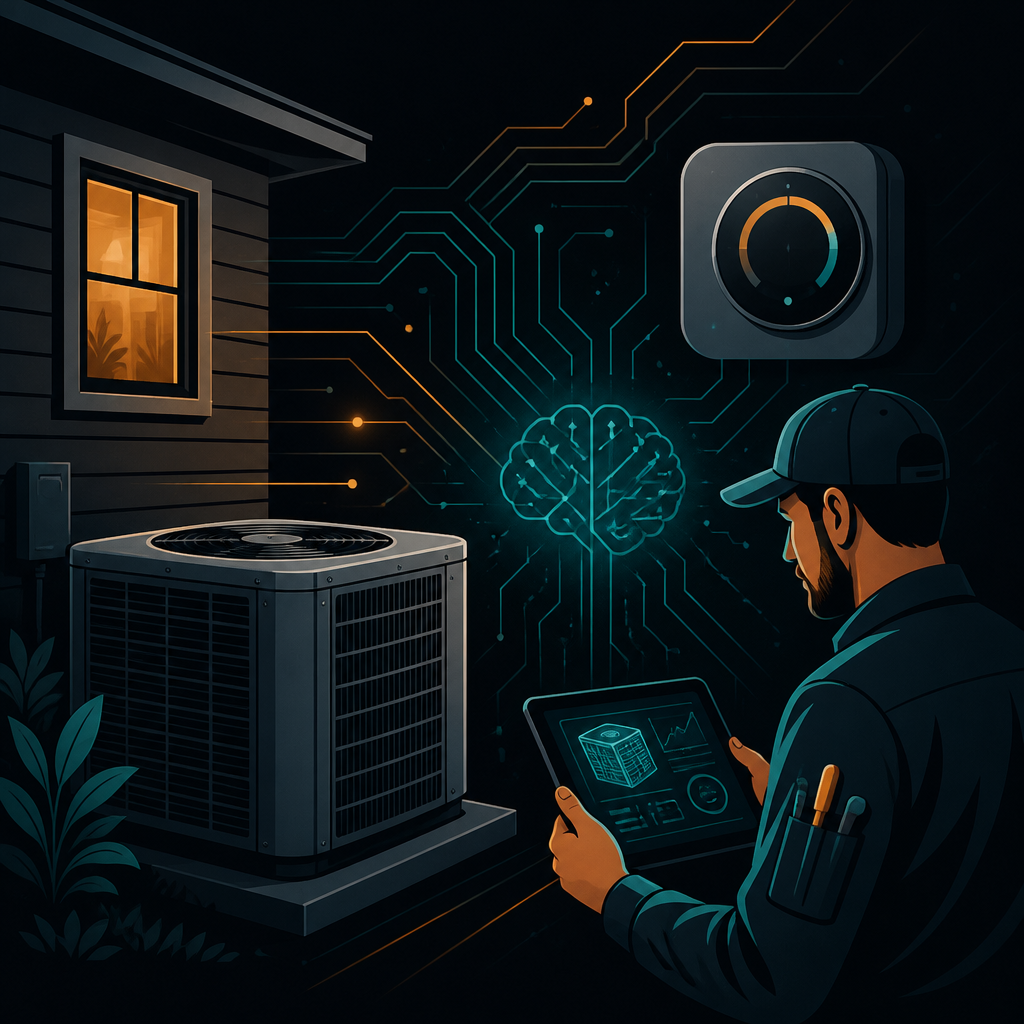
HVAC is two trades wearing one uniform. There's the technical job — load calcs, refrigerant charge, static pressure, duct sizing, making the system run right and to code. Then there's the business job — quoting, dispatching, chasing the maintenance renewal, picking up the no-cool call in July when every phone in town is ringing. AI is genuinely useful for the second one. It has no business near the first.
I've talked to enough techs running solo trucks and small shops to know the money doesn't leak at the manifold gauges. It leaks in the cab: the estimate you type at 9pm, the seasonal tune-up you forgot to follow up on, the emergency call that went to the competitor because you were on a rooftop and couldn't answer. That's the stuff worth handing to a machine.
The bright red line first
Before any tool: AI never runs a Manual J load calculation, never sizes equipment or ductwork, never sets a refrigerant charge, and never makes the EPA 608 or code call. It doesn't read the mechanical code for you and it doesn't get to decide whether that condenser is sized for the house. Large language models are confident liars about exactly the numbers that ice up coils, trip breakers, or short-cycle a $9,000 system. Use AI to write the proposal, not to engineer the system. Every sizing, charge, and safety decision stays with your certification and your instruments. That line keeps it useful and keeps you out of a callback you can't bill for.
Quotes and estimates without the 9pm session
The biggest time sink for most techs is writing proposals — especially the replacement quotes that win or lose on how clearly you explain the options. Describe the job in plain language — "replace a 20-year-old 3-ton split system, add a return in the back bedroom, customer wants a quieter unit and asked about the high-SEER rebate" — and have ChatGPT turn your rough notes into a clean, tiered scope the homeowner actually understands. Claude is the one I'd reach for on the long, multi-option jobs because it holds more context without dropping the thread. You still plug in your own equipment, labor, and load numbers — the *writing* drops from 30 minutes to five.
After-hours and peak-season calls — where HVAC actually bleeds money
No heat in January, no cool in July — these come at the worst hours, and the tech who answers gets the job. You can't be brazing a line set and on the phone at the same time. An AI-assisted CRM like HubSpot's free tier handles the sequencing and "who hasn't heard back" surfacing that no human does reliably from a truck. Pair it with fast email triage — Superhuman drafts and clears a day's worth of replies between calls — and the emergency lead stops slipping to the next name in the search results.
Maintenance agreements — the recurring revenue you keep forgetting
Service contracts are the closest thing HVAC has to predictable income, and most shops leak them because nobody chases the renewal. This is pure automation territory. Make.com connects your booking form, your CRM, and your email so a finished tune-up auto-schedules the next visit, a lapsing agreement fires a renewal reminder, and a signed estimate lands in the right folder — no copy-paste from the cab. Start with one repetitive task, automate it, then add the next.
Looking things up without burning daylight
Wiring diagrams, that obscure ECM motor cross-reference, the fault code on a 2014 Carrier board — Perplexity AI is the fastest way to find them with sources you can click and verify. Ask "what does this Honeywell fault code mean" or "what does this contactor part number cross to" and it points somewhere real. Treat it as a research assistant, not the rulebook — confirm anything code- or charge-adjacent against the actual manual and your gauges. If you live in Microsoft 365, Microsoft Copilot does the same drafting and lookup straight inside Outlook and Word.
Got a 60-page install manual or a manufacturer's spec PDF? Drop it into ChatPDF and ask it to surface the clearances, electrical requirements, and charge-by-line-length notes so you know *where to look* before you read the pages that matter.
Customer comms that make a one-truck shop look established
Techs don't lose jobs because they're bad techs. They lose them because the quote went out three days late or nobody followed up. Grammarly keeps the customer-facing writing tight so a solo operator reads as professional as a 20-truck outfit. And one person can now produce marketing that used to need an agency: Canva's Visual Suite handles truck-wrap mockups, before/after social posts, and seasonal tune-up flyers, while Jasper and copy.ai crank out service-page copy and review-request emails — see Jasper vs copy.ai if you only want to pay for one. Want a 30-second explainer for your site — "why your AC is freezing up"? Synthesia spins one up without a camera. Browse the rest of the AI marketing tools shelf if you're chasing leads.
Don't lose the details from the call
If you record your site walkthroughs or customer calls, Otter.ai and Fireflies.ai transcribe them so the details — the gate code, the customer's note about the upstairs room never cooling, the panel location — get written down instead of lost between the truck and the invoice. Just confirm consent and check your state's recording laws first.
Where I'd start
If you do nothing else this quarter: put an AI assistant on your estimate writing, a CRM with real follow-up on your leads, and an automation tool on your maintenance-agreement renewals. Those three claw back the most hours and protect your recurring revenue. Everything else is upside.
The HVAC techs winning in 2026 aren't the ones who "use AI" on the equipment — they're the ones who let AI handle the paperwork so they can stay on the roof, and who never, ever let it run the load calc.
Try Them Yourself
- Build your admin stack from the AI productivity tools collection
- Chase more leads with AI marketing tools
- Sharpen customer-facing copy with AI writing tools
- Compare the big assistants head-to-head: ChatGPT vs Claude
- Pick a copywriter: Jasper vs copy.ai