AI Tools for Nurses in 2026: What Actually Helps at the Bedside
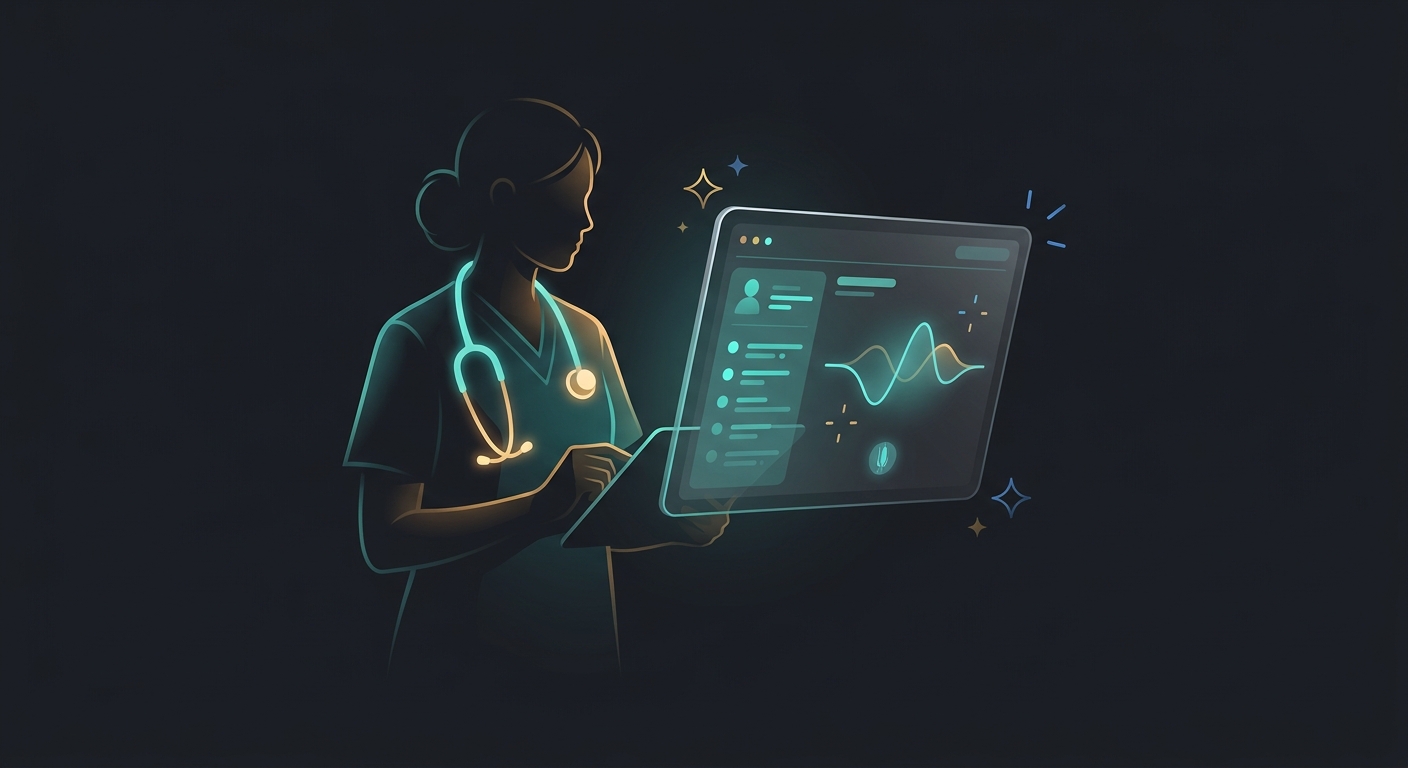
<p>Let's be honest about where nurses sit in the AI gold rush: <strong>everyone built for the doctors first.</strong> Ambient scribes got VC money, physician pilots, and glossy demos. Nurses — who do more documentation per shift than almost anyone in the building — got told to "use ChatGPT, I guess."</p>
<p>So this isn't a list of nurse-specific miracle apps, because most of those don't exist yet. It's the realistic stack: a mix of clinician tools that happen to work at the bedside, plus a hard rule about what you can never type into any of them. Start there.</p>
<h2>The one rule before anything else: no PHI. Ever.</h2>
<p>If a tool isn't in a <strong>signed BAA (Business Associate Agreement)</strong> with your hospital, no patient names, no MRNs, no dates of birth, no "the 64-year-old in bed 3." The free version of ChatGPT is not HIPAA-compliant. Neither is the free tier of most things below. <strong>De-identify everything, or use only the enterprise version your facility has cleared.</strong> Break this and the tool stops being a shortcut and becomes a reportable breach. That's the whole game.</p>
<h2>Charting and documentation</h2>
<p>This is the burnout engine, so it's where AI earns its keep. The ambient scribes were built for provider visits, but nurses are quietly using them for admission assessments, wound notes, and narrative charting where dictation beats typing on a COW at 3 a.m.</p>
<p><a href="/tool/abridge">Abridge</a> is the most hospital-integrated of the bunch — if your system already runs it for physicians, ask whether your unit can get access. <a href="/tool/freed-ai">Freed AI</a> is the scrappier, cheaper option clinicians sign up for on their own; it turns a spoken assessment into a structured note in seconds. <a href="/tool/deepscribe">DeepScribe</a> sits in the same lane. They're close enough that it's worth seeing them side by side — here's <a href="/compare/abridge-vs-freed-ai">Abridge vs Freed AI</a>.</p>
<p>My take: don't buy one yourself expecting it to plug into Epic on its own. The real win is when <strong>your facility</strong> deploys it. Solo, treat it as a dictation-to-draft tool you still copy-paste and proofread.</p>
<h2>Clinical reference — the safe way to ask "is this right?"</h2>
<p>Here's where nurses get burned: asking a general chatbot for a drug dose or interaction. <strong>Don't.</strong> General models still hallucinate clinical facts with total confidence.</p>
<p>Use the tools built to cite real evidence instead. <a href="/tool/openevidence">OpenEvidence</a> answers clinical questions with linked, peer-reviewed sources — it's free for verified clinicians and genuinely good for "what does the latest guideline actually say." <a href="/tool/consensus">Consensus</a> does the same thing across research papers when you want the evidence base, not a vibe. These are your bedside reference layer. Browse the rest in <a href="/category/healthcare">AI healthcare tools</a>.</p>
<h2>Patient education and discharge instructions</h2>
<p>Nurses translate medicine into plain English all day. AI is legitimately great at this — <em>with</em> the no-PHI rule. Ask a model to rewrite discharge instructions at a 6th-grade reading level, or in Spanish, and you save 20 minutes per patient.</p>
<p><a href="/tool/chatgpt">ChatGPT</a>, <a href="/tool/claude">Claude</a>, and <a href="/tool/gemini">Gemini</a> all handle this well; Claude tends to keep a warmer, less clinical tone, which patients actually read. Can't decide? <a href="/compare/chatgpt-vs-claude">ChatGPT vs Claude</a> breaks it down. Then run the output through <a href="/tool/grammarly">Grammarly</a> or <a href="/tool/quillbot">QuillBot</a> to simplify the language one more notch. The whole <a href="/category/writing">AI writing category</a> is worth a look here.</p>
<h2>Handoffs, SBAR, and your own brain</h2>
<p>Shift handoff is where details die. <a href="/tool/otter-ai">Otter.ai</a> can transcribe an in-service or a complex care-conference so you're not scribbling. <a href="/tool/notion-ai">Notion AI</a> is quietly the best place to keep your personal "brain" — SBAR templates, unit protocols, med cheat sheets, NCLEX study notes — and ask questions across all of it. <a href="/tool/perplexity-ai">Perplexity</a> is the fast, cited answer engine for policy and pharmacology lookups when you don't need a full chat. More in <a href="/category/productivity">AI productivity tools</a>.</p>
<h2>What's actually missing</h2>
<p>A scribe built for <strong>nursing</strong> workflow — flowsheets, I&Os, care plans, not just SOAP notes. It's coming. Until then, the stack above is duct tape, but it's <em>good</em> duct tape, and it gives you back the one thing the job never does: time.</p>
<h2>Try Them Yourself</h2>
<ul>
<li>Charting: <a href="/tool/abridge">Abridge</a>, <a href="/tool/freed-ai">Freed AI</a>, <a href="/tool/deepscribe">DeepScribe</a></li>
<li>Clinical reference: <a href="/tool/openevidence">OpenEvidence</a>, <a href="/tool/consensus">Consensus</a></li>
<li>Patient education: <a href="/tool/claude">Claude</a>, <a href="/tool/chatgpt">ChatGPT</a>, <a href="/tool/grammarly">Grammarly</a></li>
<li>Handoffs & study: <a href="/tool/notion-ai">Notion AI</a>, <a href="/tool/otter-ai">Otter.ai</a>, <a href="/tool/perplexity-ai">Perplexity</a></li>
<li>Browse more: <a href="/category/healthcare">AI healthcare tools</a> · <a href="/category/productivity">AI productivity tools</a></li>
</ul>
<p><em>Reminder, because it matters: de-identify everything, and only use what your facility has cleared under a BAA. AI is your draft, not your charting signature.</em></p>
Tools mentioned